
Dennise Yeh, co-founder of The Sartorial Club, reflects on bespoke tailoring, why exceptional cloth still matters, how taste is cultivated, and what connects a global community of craftsmen, purveyors, collectors and tastemakers.

Dennise Yeh in Venice © The Sartorial Club
Q: You began exploring personal style from a young age. Looking back, what first drew you to the world of bespoke and craftsmanship? Any memorable sartorial moments?
My family had a simple philosophy when it came to buying things: buy the best quality you can afford, use it well, and take care of it. That probably shaped me more than I realised.
Growing up in Taipei, we travelled to Hong Kong once a year. I remember watching my father spend hours choosing a suit. There was never any rush. Every detail mattered. On Sunday afternoons, he'd polish his shoes before the week began. My mother had the same appreciation for beautifully made leather goods and silk scarves.
Looking back, I realised they weren't teaching me about luxury. They were teaching me to value quality, care and longevity. That philosophy has stayed with me ever since.
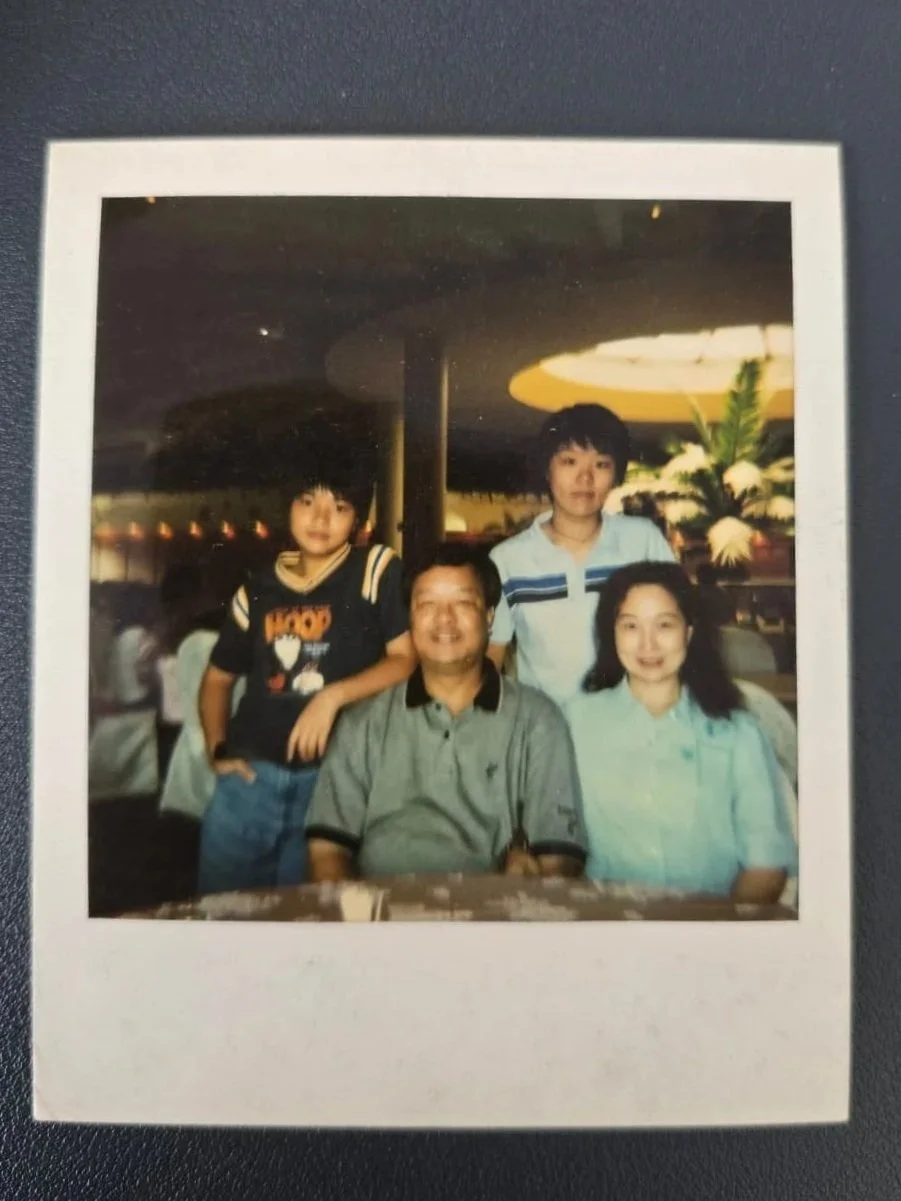
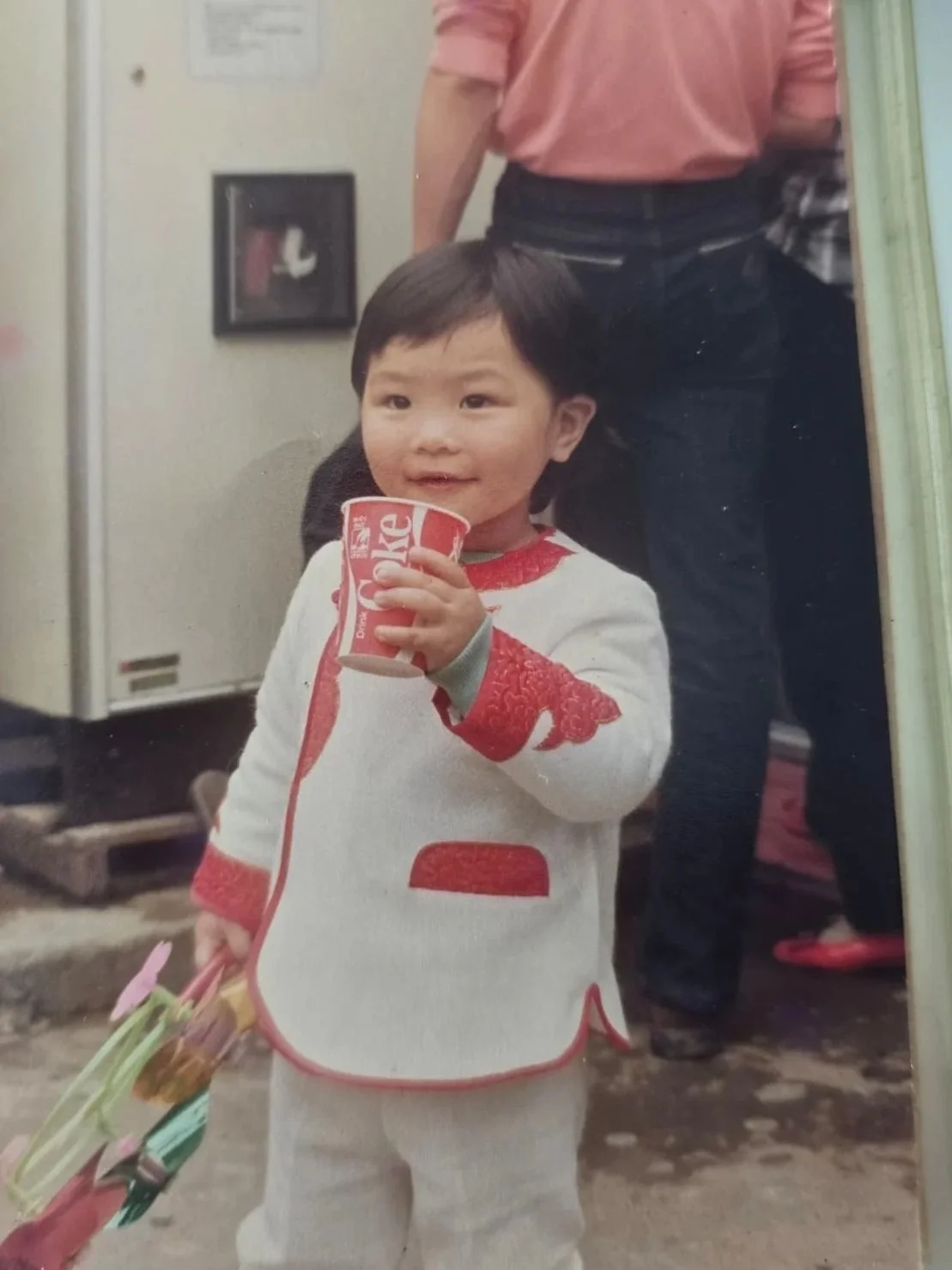
Dennise and family (left); Childhood in Taiwan (right). © Dennise Yeh
Q: Bespoke tailoring has traditionally been a predominantly male world. As a woman, what drew you to menswear, and how has that perspective shaped the way you see the craft?
I've always been drawn to a more masculine silhouette. Even as a teenager, GQ was my source of inspiration.
Growing up in Taiwan, we wore uniforms to school. Looking back, that was probably my first experience with custom clothing. I collected pages from GQ, saved up and asked a tailor to recreate the look. Looking back now, it was probably made-to-measure rather than true bespoke, but at the time it felt like the most special thing I owned.
I still remember putting it on for the first time. It fitted properly. The cloth felt different. More importantly, it felt like me.
That's what craftsmanship has always meant to me. It is not about following someone else's idea of style, but finding something that genuinely resonates with who you are.
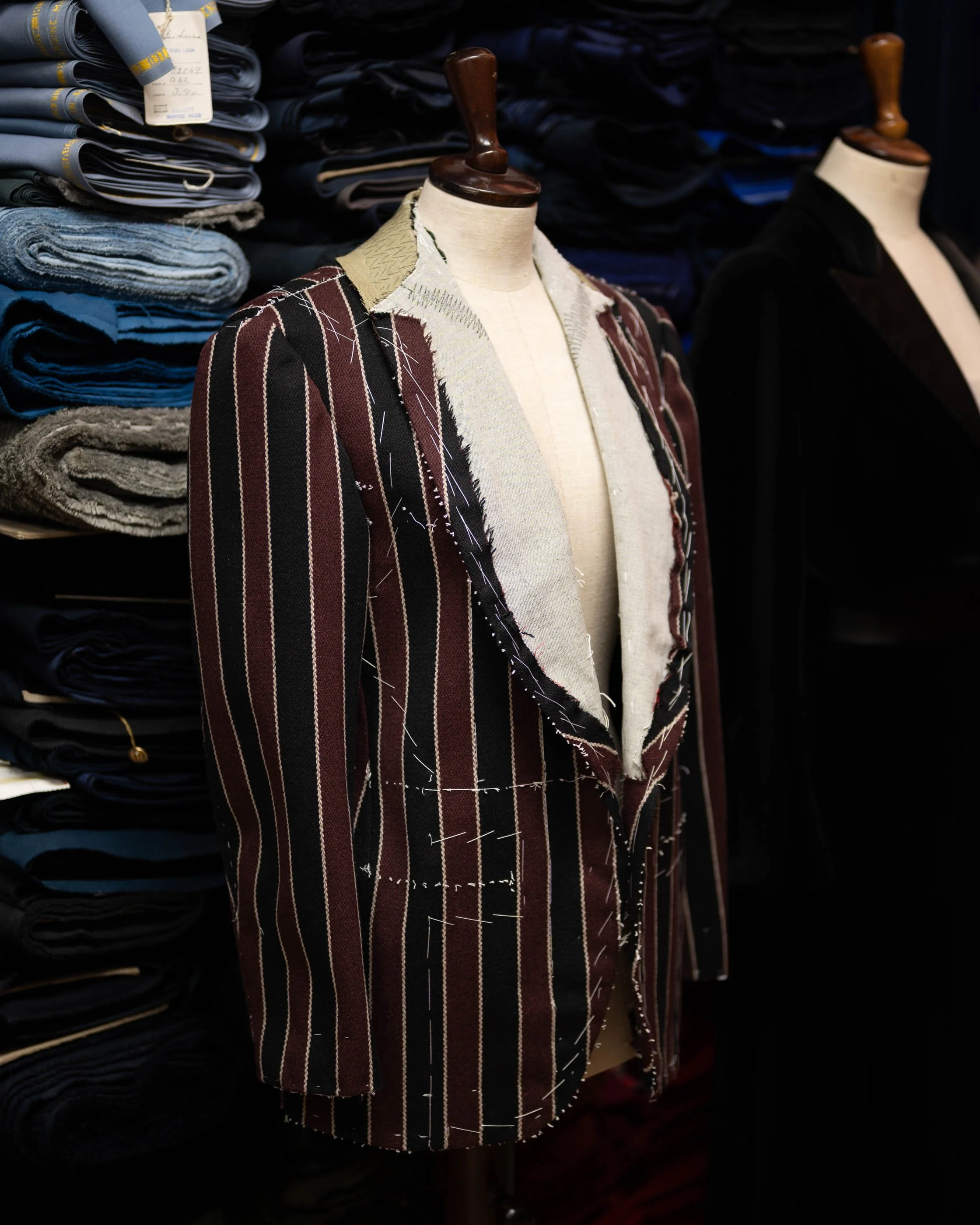
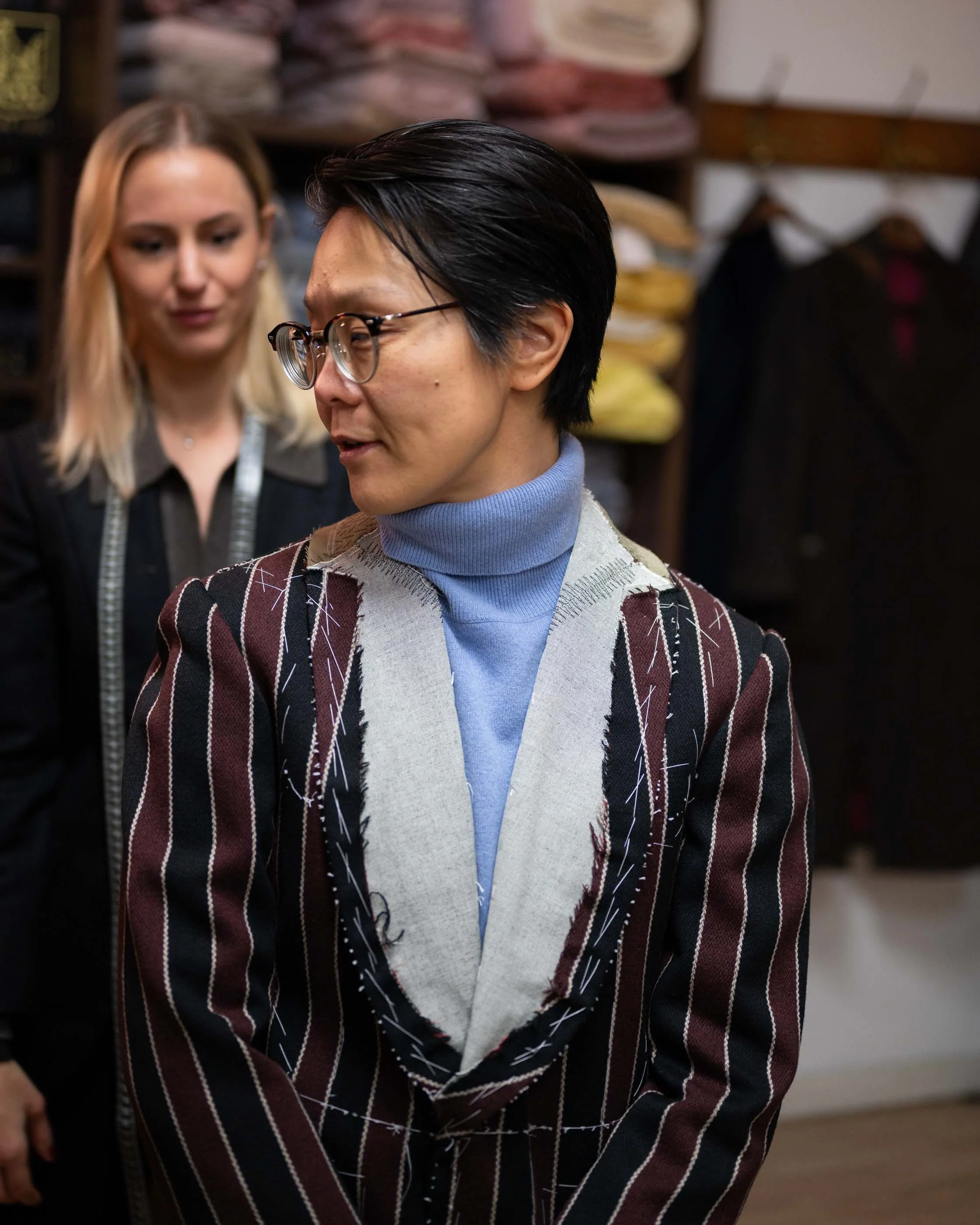
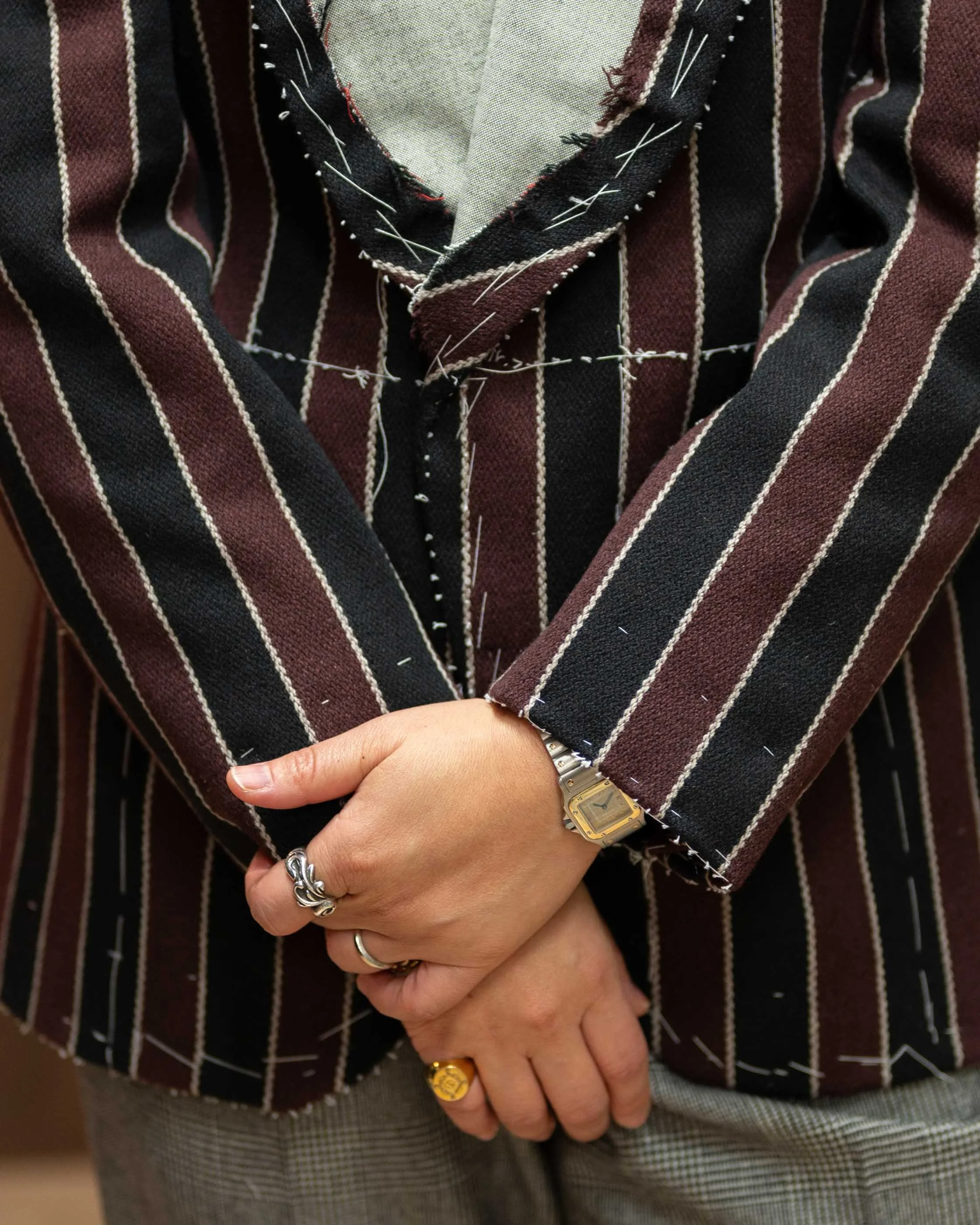
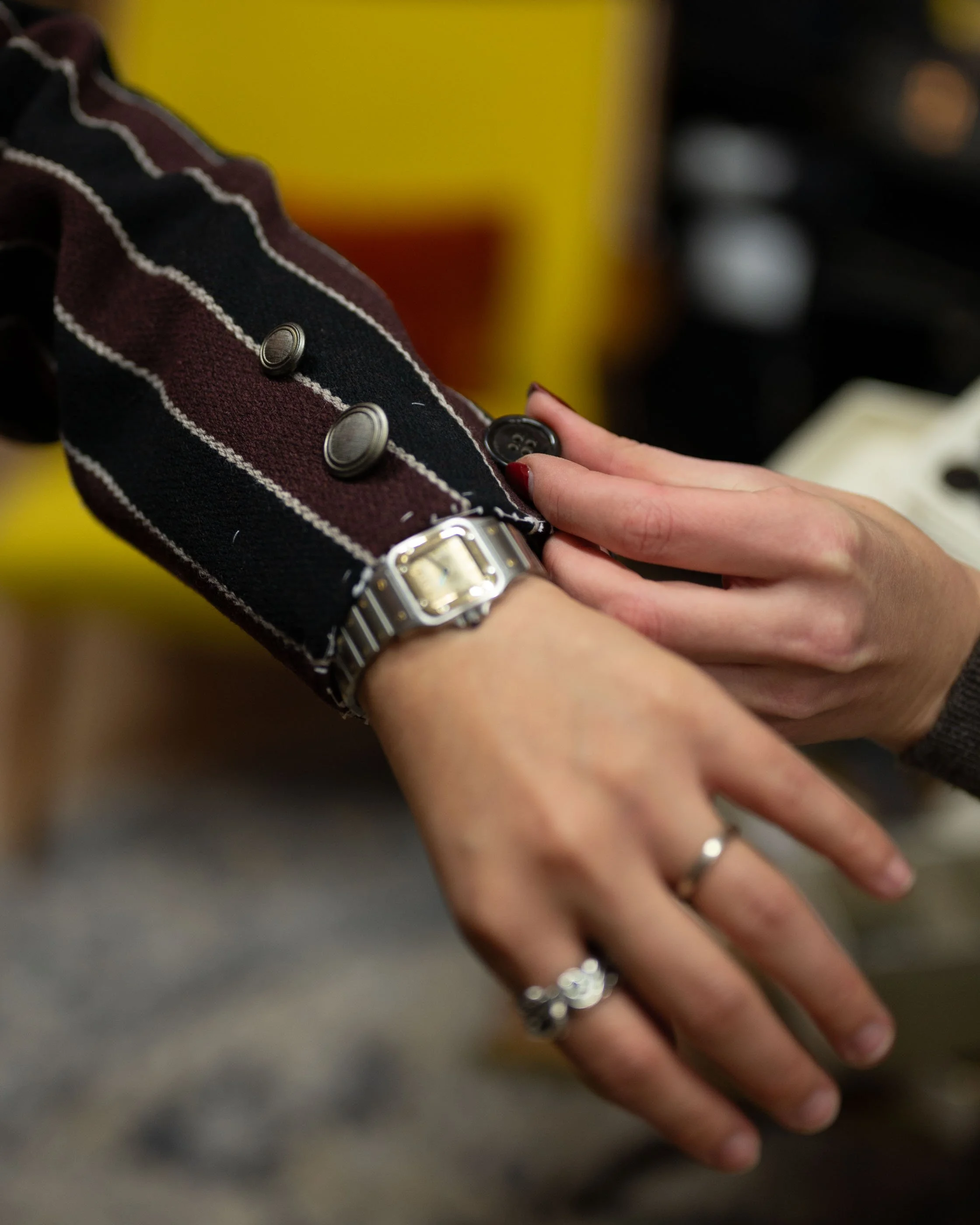
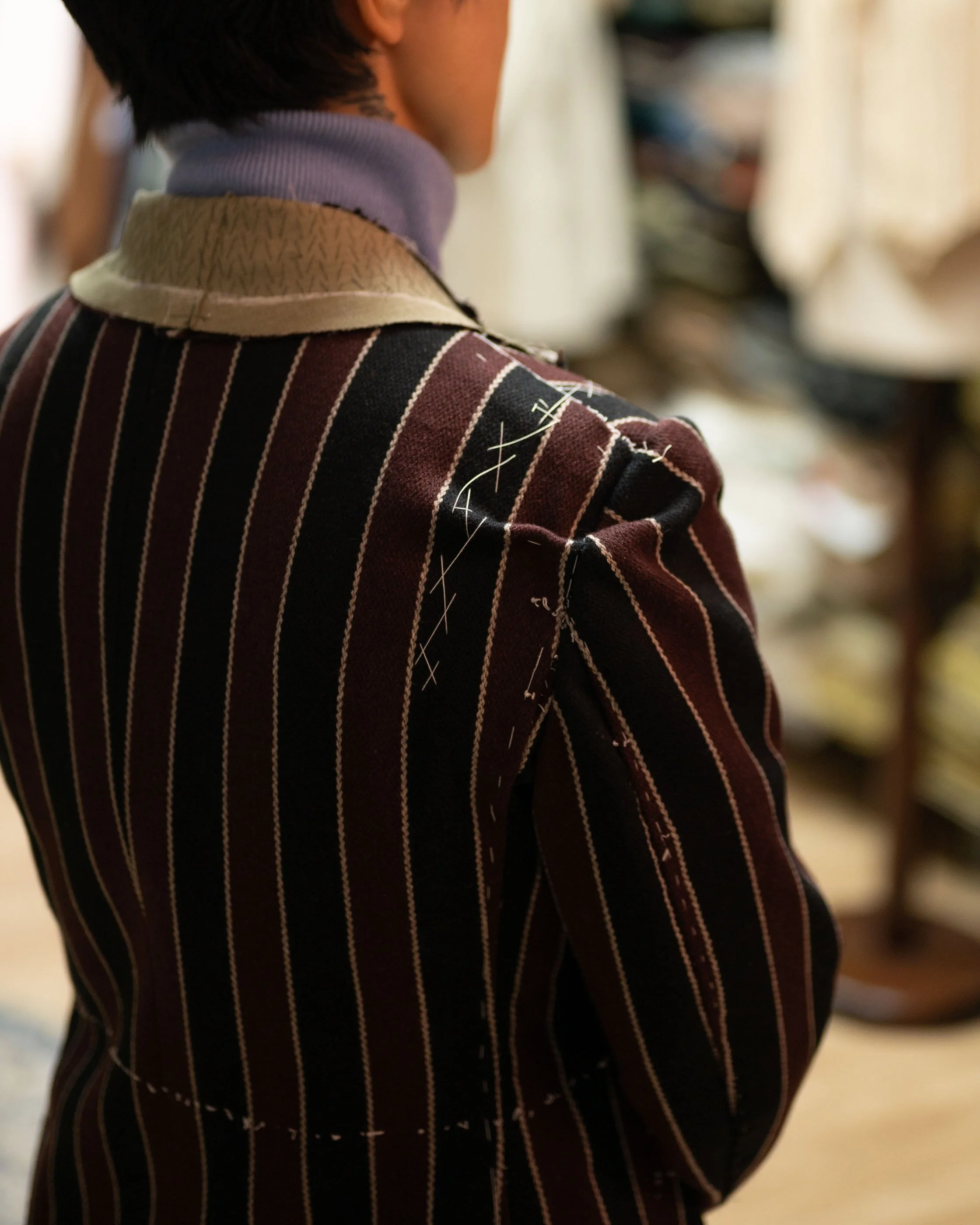
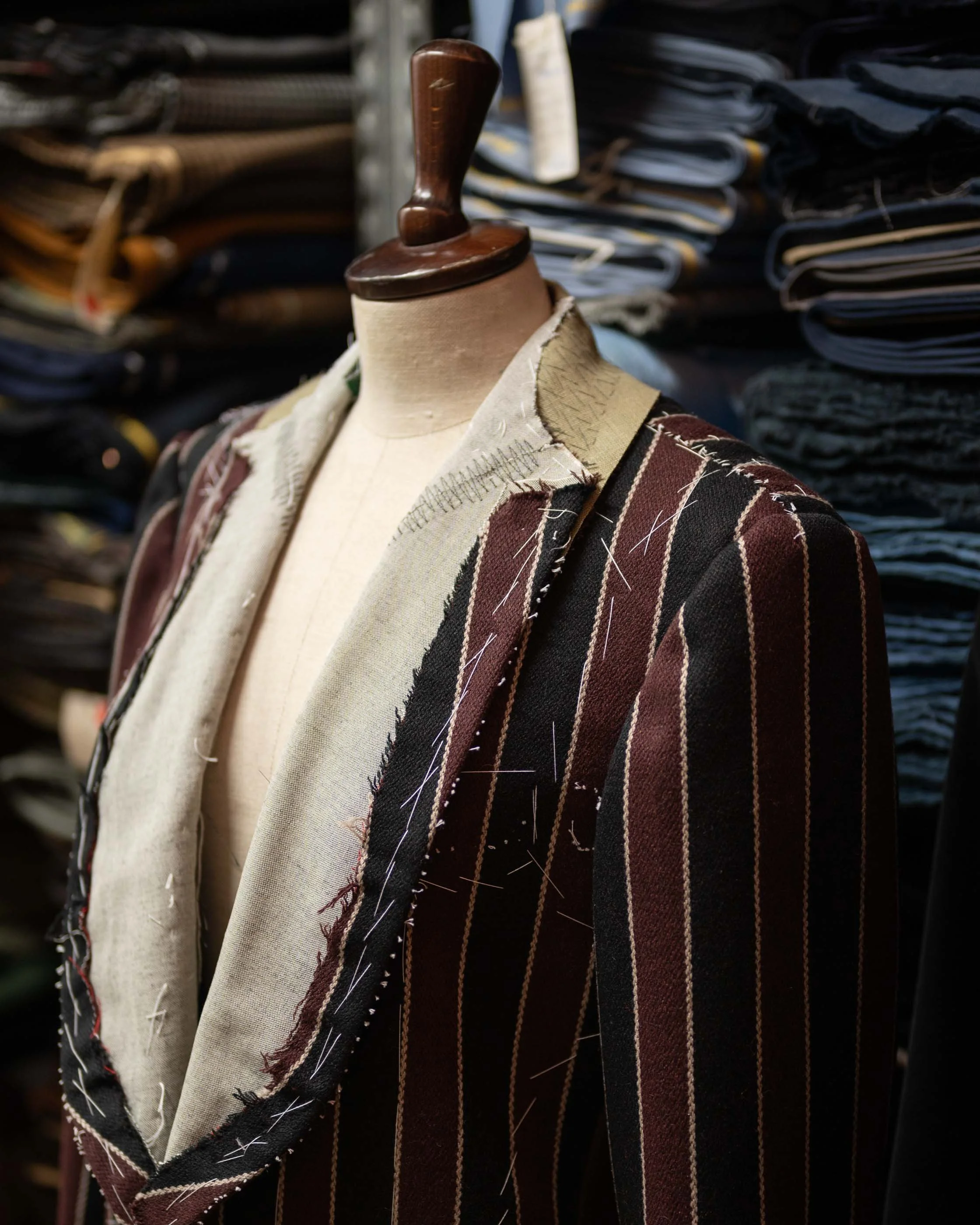
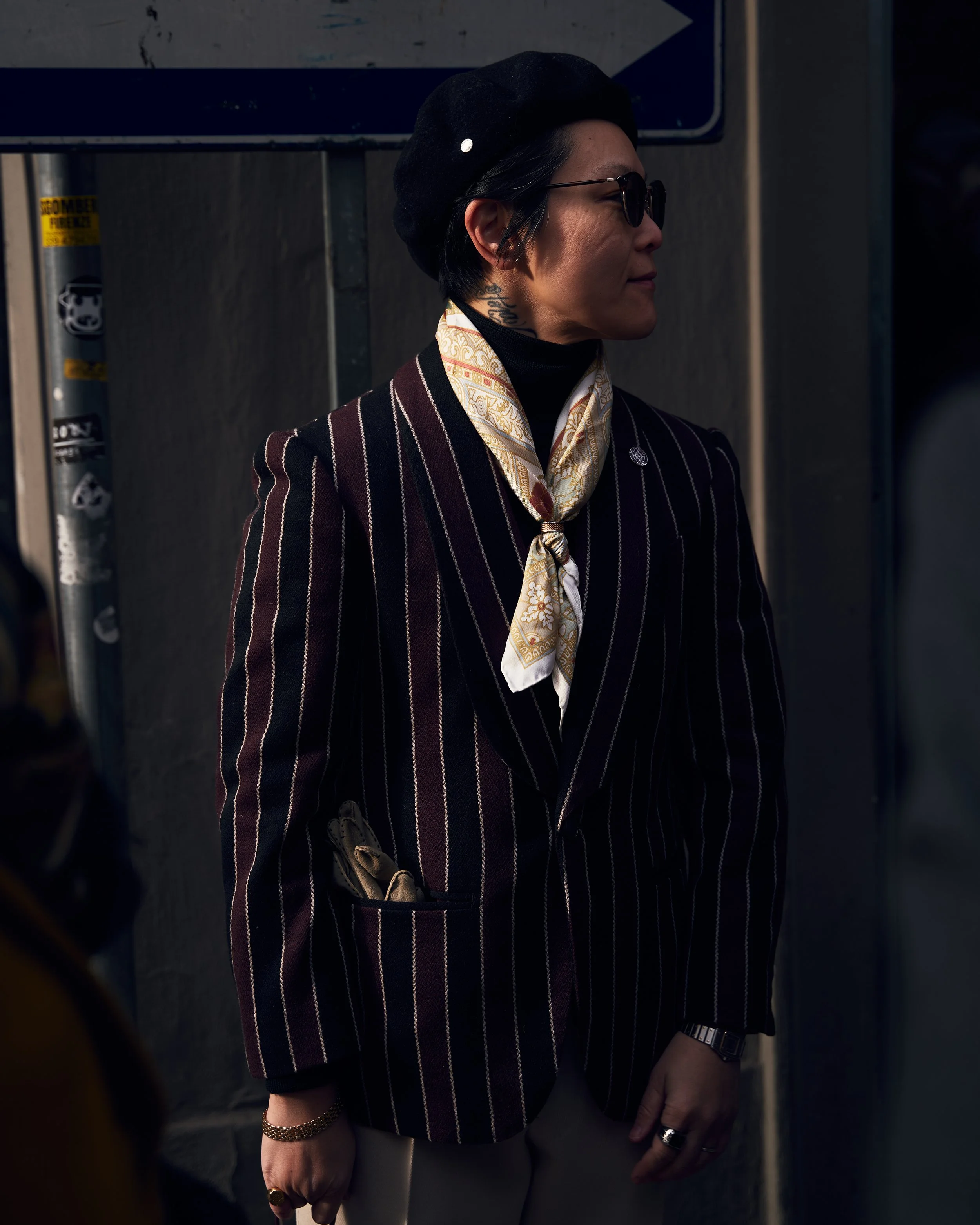
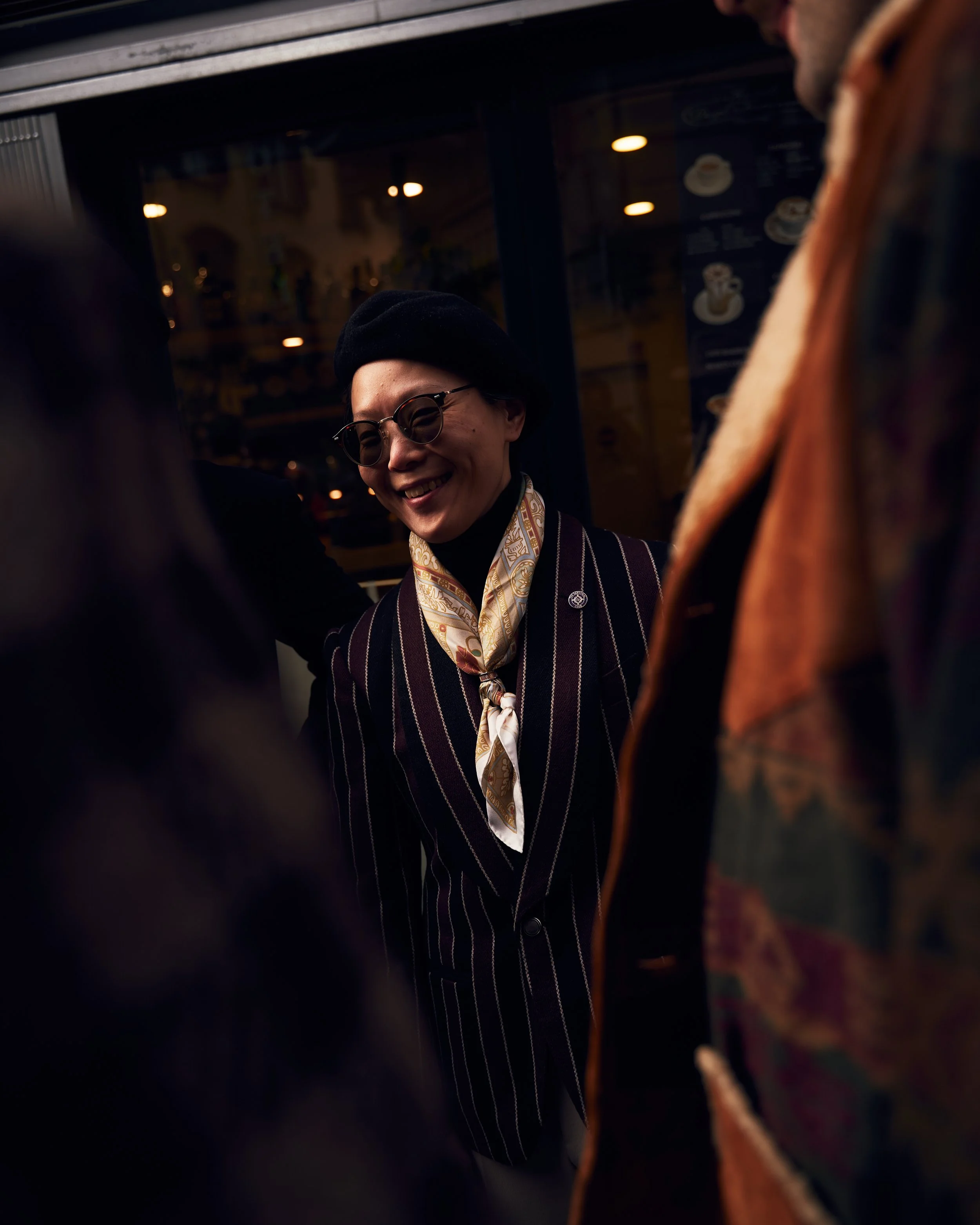
Bespoke fitting and tailoring by Laura Bachmeier of Sartori Vestificio. © The Sartorial Club
Q: As your taste and style have evolved, how has your understanding of quality and craftsmanship changed over the years?
The biggest change has been how I learn.
Growing up in Taipei, "Made in Italy" or "Made in England" was almost enough. As I moved to the US and later Europe, I had access to so much more information online.
But over the last five years, I realised information only takes you so far. I became much more interested in going to the source – meeting the people behind the craft, understanding how things are made, and asking questions firsthand.
I often compare it to journalism. At first, I was reporting what others had already discovered. Today, I want to investigate for myself. From there, I can confidently say that real understanding always begins at the source.
‘‘…we live in an era of bite-sized information and exceptional marketing. It's easy to admire the finished product without understanding the people, the process, or the purpose behind it. That can easily dilute what craftsmanship really means.’’
Q: Why do cloth, craftsmanship, and community matter to you?
For me, they only make sense together.
I often say we're living through a craftsmanship renaissance. After decades of chasing convenience, speed, and trends, more people are beginning to appreciate the value of things that are made well and made to last.
At the same time, we live in an era of bite-sized information and exceptional marketing. It's easy to admire the finished product without understanding the people, the process, or the purpose behind it. That can easily dilute what craftsmanship really means.
That's why community matters. It gives us the opportunity to go beyond the stories and connect directly with the hands and minds behind the craft. We ask questions. We learn from each other. We develop our own understanding instead of borrowing someone else's. To me, that's where authenticity comes from.
Q: The Sartorial Club was founded during the pandemic and has since grown into a global community. What inspired you to create it, and what need were you hoping it would fulfil?
I believe craftsmanship deserves a global community.
When we started The Sartorial Club, we asked ourselves a simple question: Would we join this club ourselves? If the answer wasn't yes, there was no point building it.
From the very beginning, we wanted to create something authentic. A place where craftspeople, makers, collectors, and enthusiasts could learn from one another, build genuine friendships, and celebrate craftsmanship together.
We started with tailoring because that's where our own journey began. But the more we travelled and the more people we met, the more we realised craftsmanship has no boundaries. Today, whether it's tailoring, shoemaking, winemaking, jewellery, or hospitality, the curiosity is exactly the same. That's the community we wanted to build.
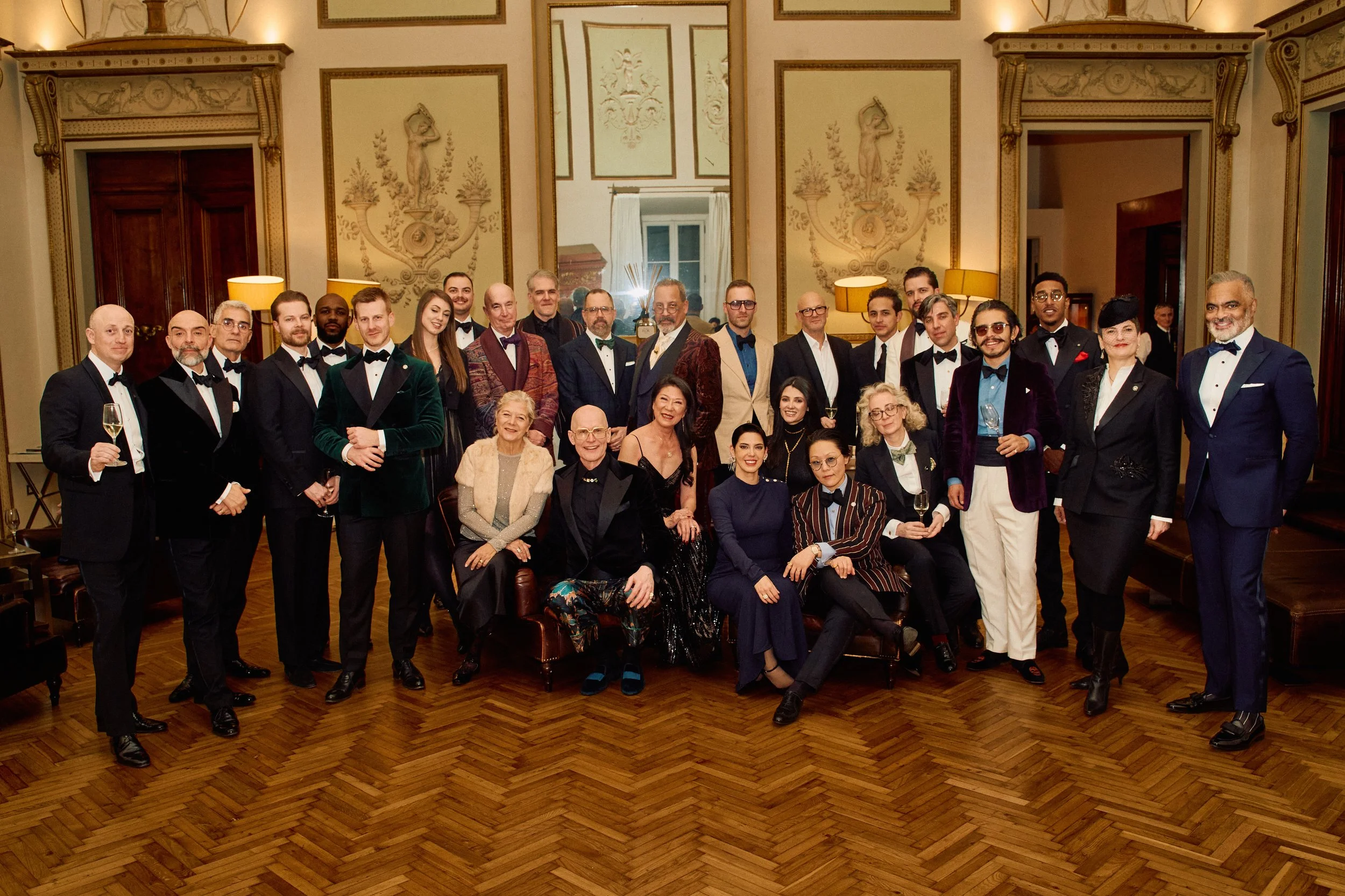
Dennise with club members. © The Sartorial Club
Q: Your members include craftspeople, purveyors, collectors, and tastemakers from around the world. Beyond tailoring, what do you think truly connects them?
It happened naturally.
We started with tailoring because that's what first brought us together. But the more we travelled, the more we realised the same values exist across every discipline.
Whether it's a shoemaker in Florence, a winemaker in Piedmont, a chef in Tokyo, or a glassmaker in Murano, they're all driven by the same pursuit. A dedication to their craft, a respect for tradition, and a desire to leave something meaningful behind.
That's when we realised one simple thing: Categories don't matter. Curiosity does. And tailoring was simply the beginning.
Q: We often hear the word discernment, but what does it actually mean to you? Has your understanding of the word changed over the years?
Absolutely.
Early on, I was probably more interested in finding the best. The best construction, the best cloth, the best technique. Over time, I realised craftsmanship is much more nuanced than that.
Today, I think discernment is understanding the context hence it is a responsibility. A seven-fold tie isn't automatically better than a three-fold tie. They both have a purpose. The same goes for handmade versus machine-made, or traditional versus modern. The answer isn't always found in the rulebook.
The more people I meet and the more workshops I visit, the more I appreciate that craftsmanship is about making thoughtful decisions, not perfect ones. To me, that's what good taste really is.
‘‘The cloth itself isn't what fascinates me anymore. It's what the choice reveals about the person behind it.’’
Q: What have you learned about people through the cloth they choose?
I've learned that choosing cloth is a deeply personal decision.
Most people start with the practical things. They think about colour, texture, seasonality, or where they'll wear the garment. That's completely natural.
But once those needs are met, something interesting happens. People stop asking, "What should I choose?" and start asking, "What feels right to me?"
That's where personality begins to show. Some are drawn to quiet elegance. Others enjoy bold patterns or unusual fibres. Neither is right or wrong.
‘‘When craftsmanship and purpose come together, the cloth becomes much more than a material. It becomes something people connect with.’’
Q: You've handled cloth from some of the world's finest mills and makers. What catches your attention when you encounter a material for the first time?
Technical qualities are important, but they're only part of the story.
Of course I look at the handle, the weave, the performance, and how the cloth will age over time. Those things matter. But what interests me just as much is the thinking behind it.
Who made it? Why was this fibre chosen? What traditions does it represent? What problem was the maker trying to solve?
To me, every great cloth should have a story worth wearing.
When craftsmanship and purpose come together, the cloth becomes much more than a material. It becomes something people connect with.
Q: Has there ever been a piece of cloth that fundamentally changed the way you think about craftsmanship or style?
The more I immersed myself in the world's finest mills and makers, the more I realised I was looking for something beyond seasonal collections or technical excellence. I wanted a deeper connection with what I was wearing.
Meeting House of Tengri changed my perspective.
Their cloth isn't remarkable simply because of the fibre. What moved me was their commitment to preserving Mongolia's noble fibres, supporting the communities behind them, and proving that true craftsmanship can create a positive impact far beyond the finished product.
That made me realise the finest cloth doesn't just tell the story of a maker. It can also protect the heritage, people, and traditions that made it possible.
Q: Designing a club cloth for such a diverse global community is no easy task. What principles guided the creation of the Sartorial Club’s Cloth of Distinction, and where did you refuse to compromise?
From the very beginning, we knew one thing.
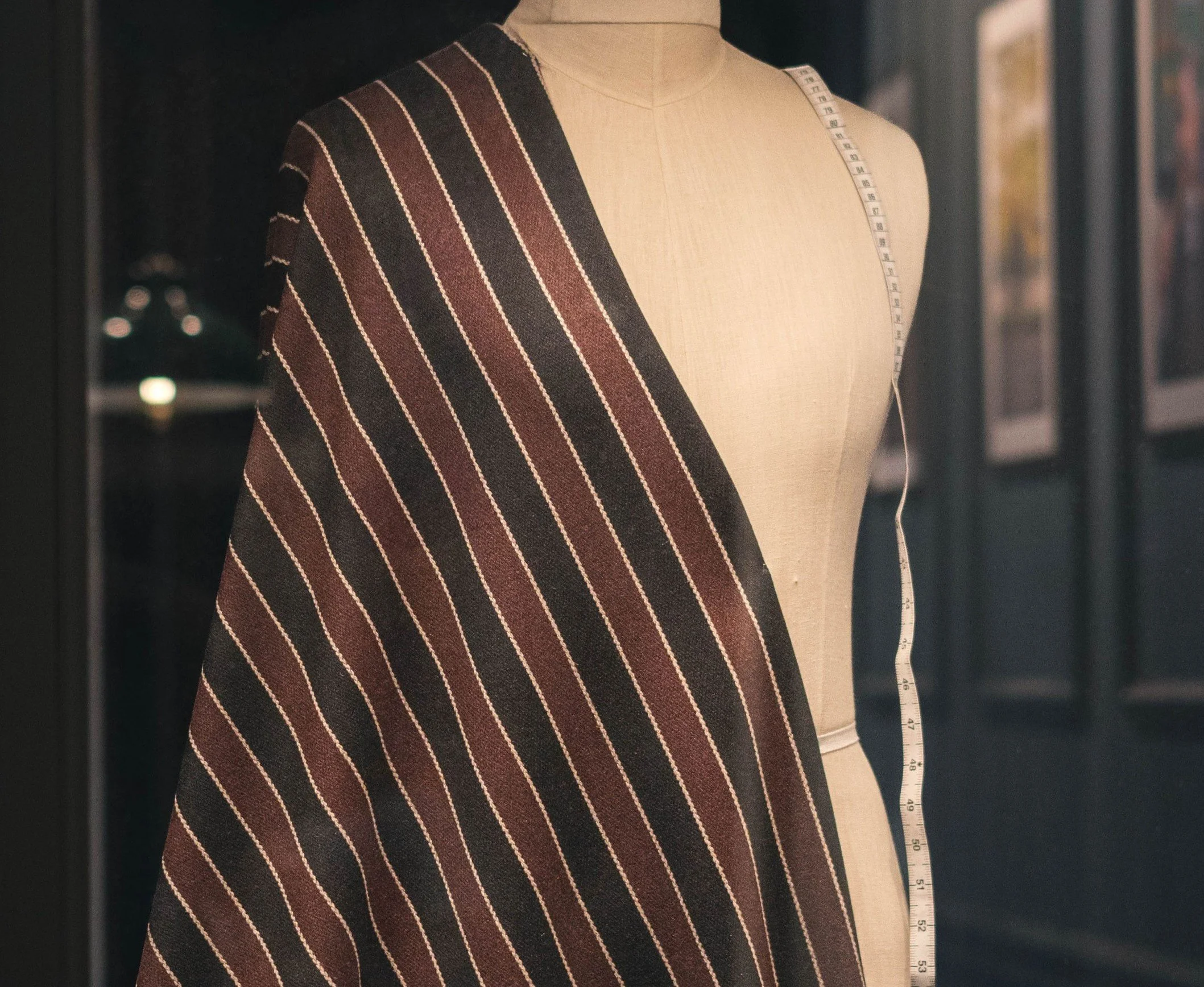
We weren't interested in creating another limited-edition cloth. We wanted to create an identity.
Our members come from different countries, professions, and backgrounds, but they're connected by a shared appreciation for craftsmanship. The Club Cloth had to reflect that. It needed to stand for something much bigger than its design.
That's why every decision mattered. The maker. The fibre. The design. The people behind the production. Every element had to align with the values of The Sartorial Club.
When we met House of Tengri, it felt like a natural fit. We weren't just choosing an exceptional cloth. We were choosing a story, a philosophy, and a community that reflected our own.
For me, that's what a true Club Cloth should be. Something people wear not simply because it is exclusive, but because they genuinely believe in what it represents.
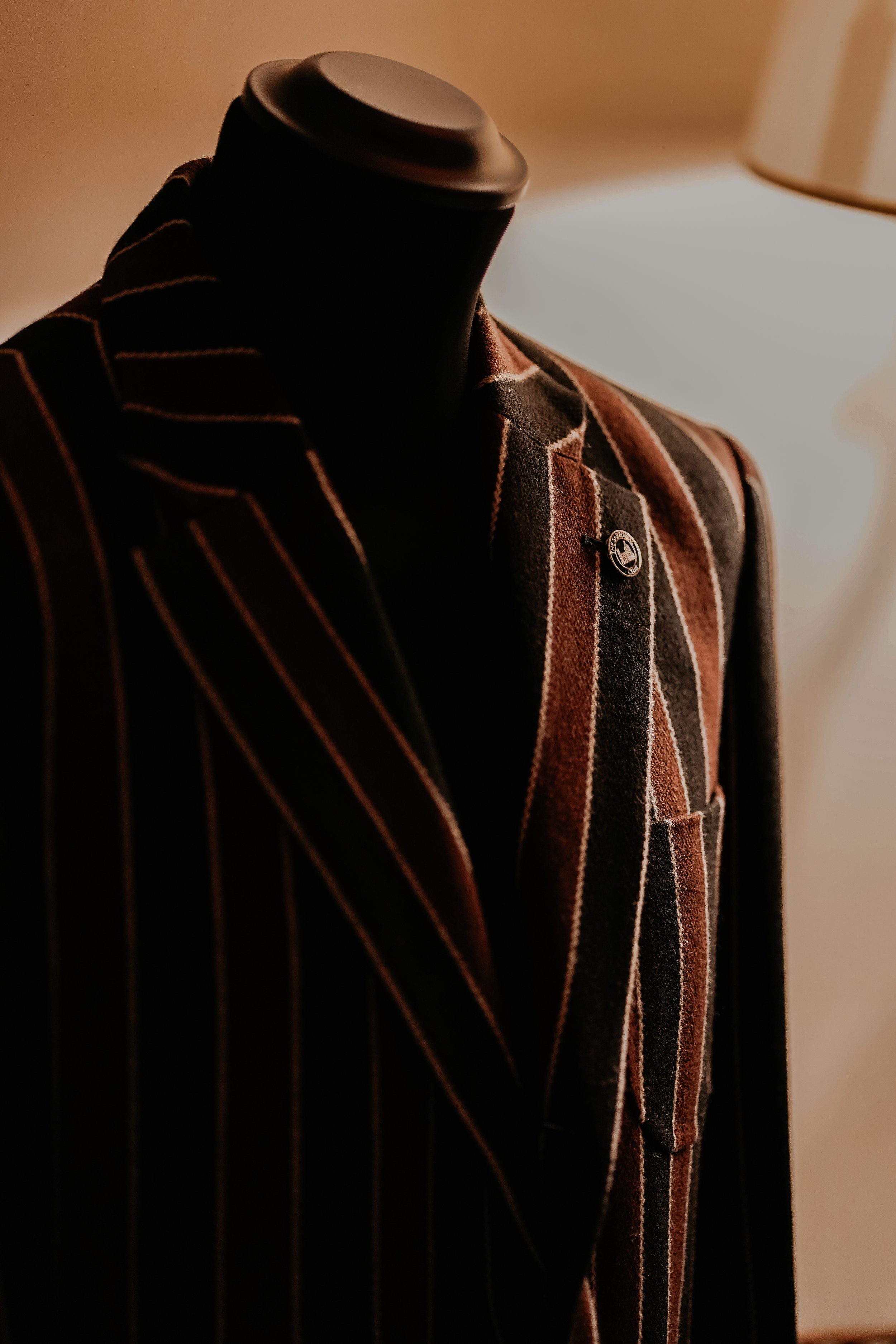
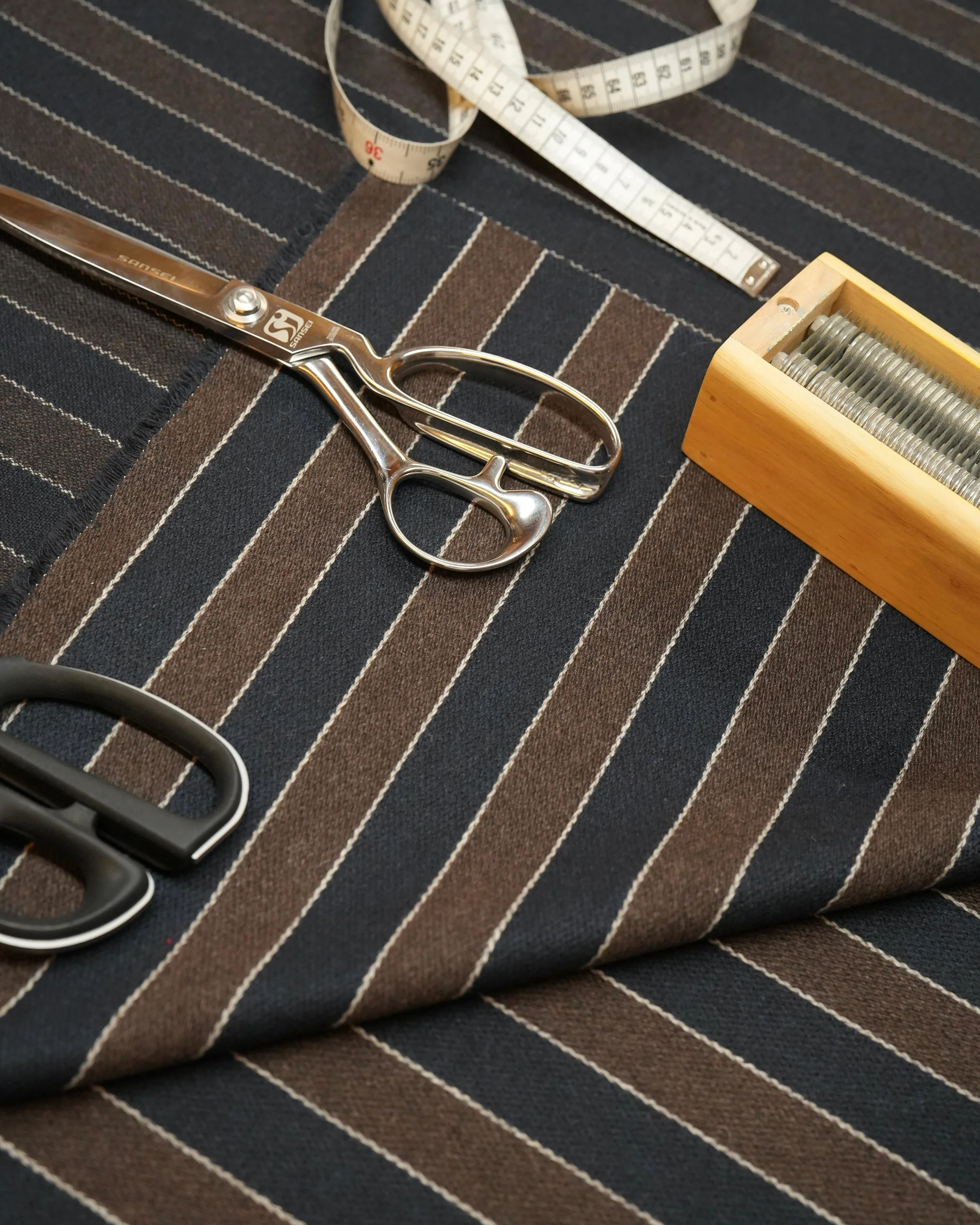
The Sartorial Club Cloth, Stripes of Distinction, Edition I (Left) and Edition II (Right). © The Sartorial Club
Q: Members travelled internationally to experience the cloth and gather around a shared appreciation for tailoring and craftsmanship. Why do those moments matter, particularly in an increasingly digital world?
Craftsmanship is meant to be experienced together.
Digital platforms have made it easier than ever to discover makers, learn new skills, and stay connected across the world. We wouldn't have built The Sartorial Club without them.
But there are moments that simply can't be replicated through a screen.
Watching a member feel the Club Cloth for the first time. Standing beside the people who made it. Meeting someone you've spoken to online for years and finally sharing a glass of wine together. Those are the moments that create lasting memories.
I still remember launching the Club Cloth with House of Tengri in London. For months, members had followed the journey through photos, videos, and stories. When they finally gathered at Princes Arcade, you could feel the excitement in the room. It was no longer just a cloth. It had become part of our collective story.
That's what we try to create at The Sartorial Club. Not simply events, but shared experiences that people carry with them long after they return home.
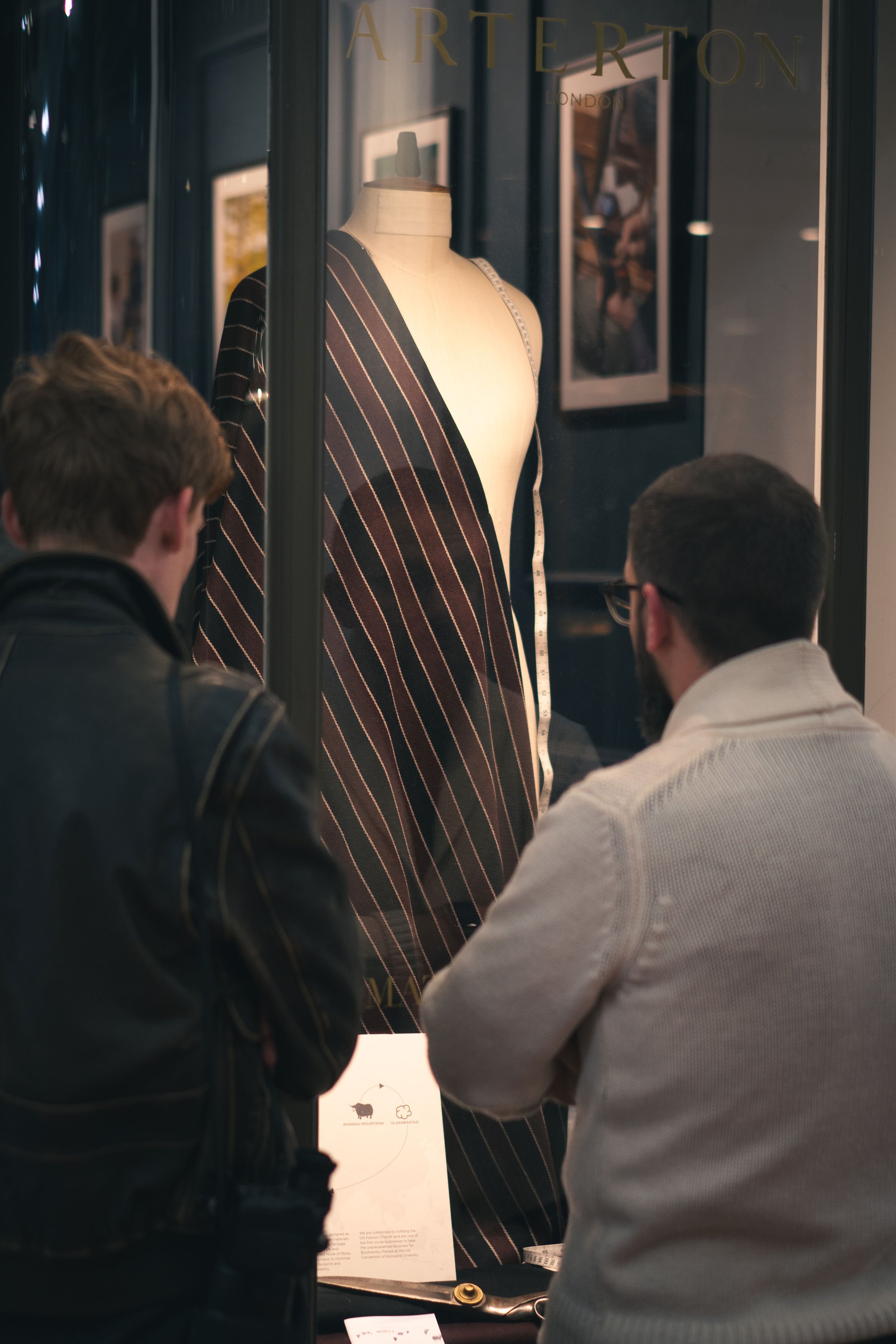
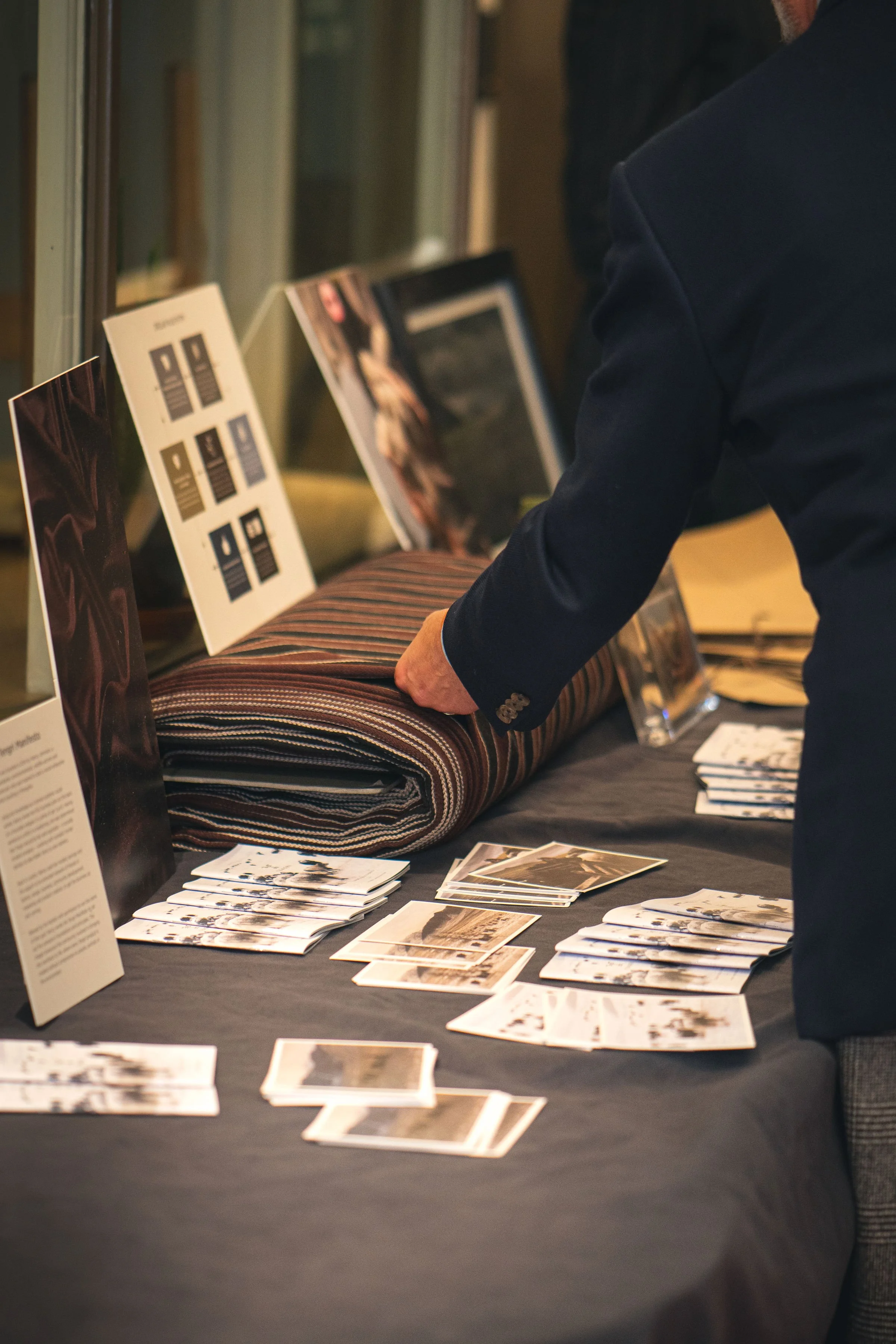
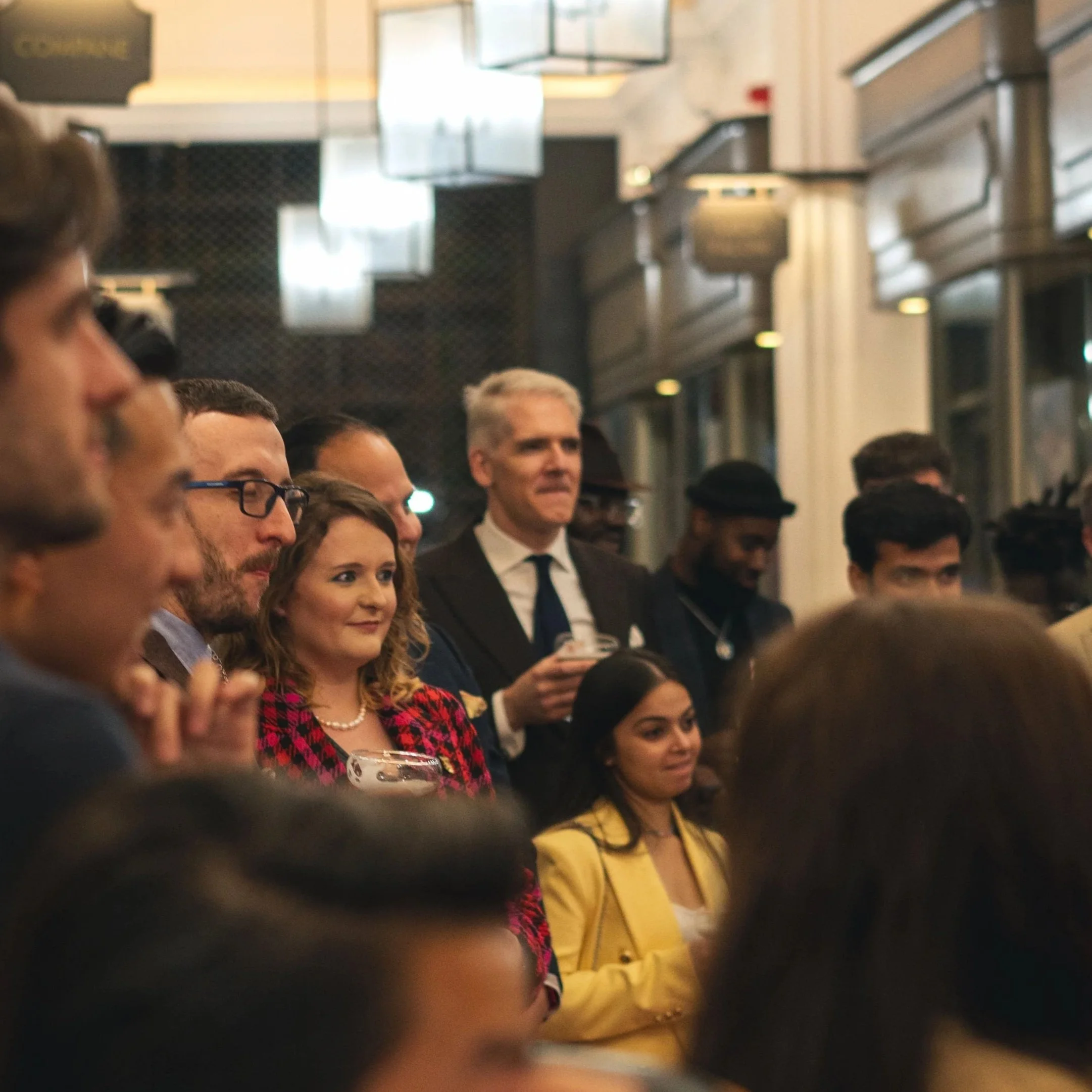
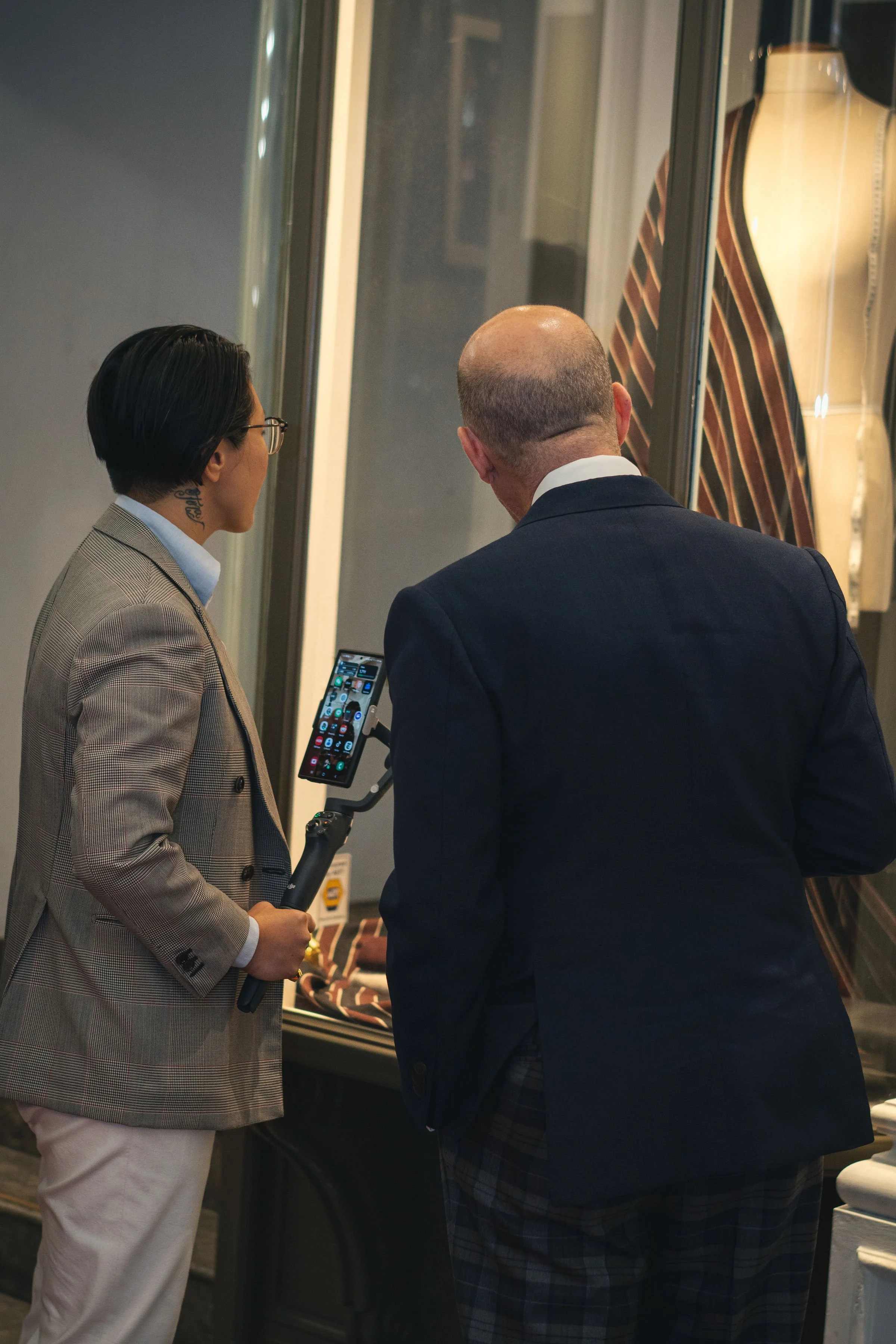
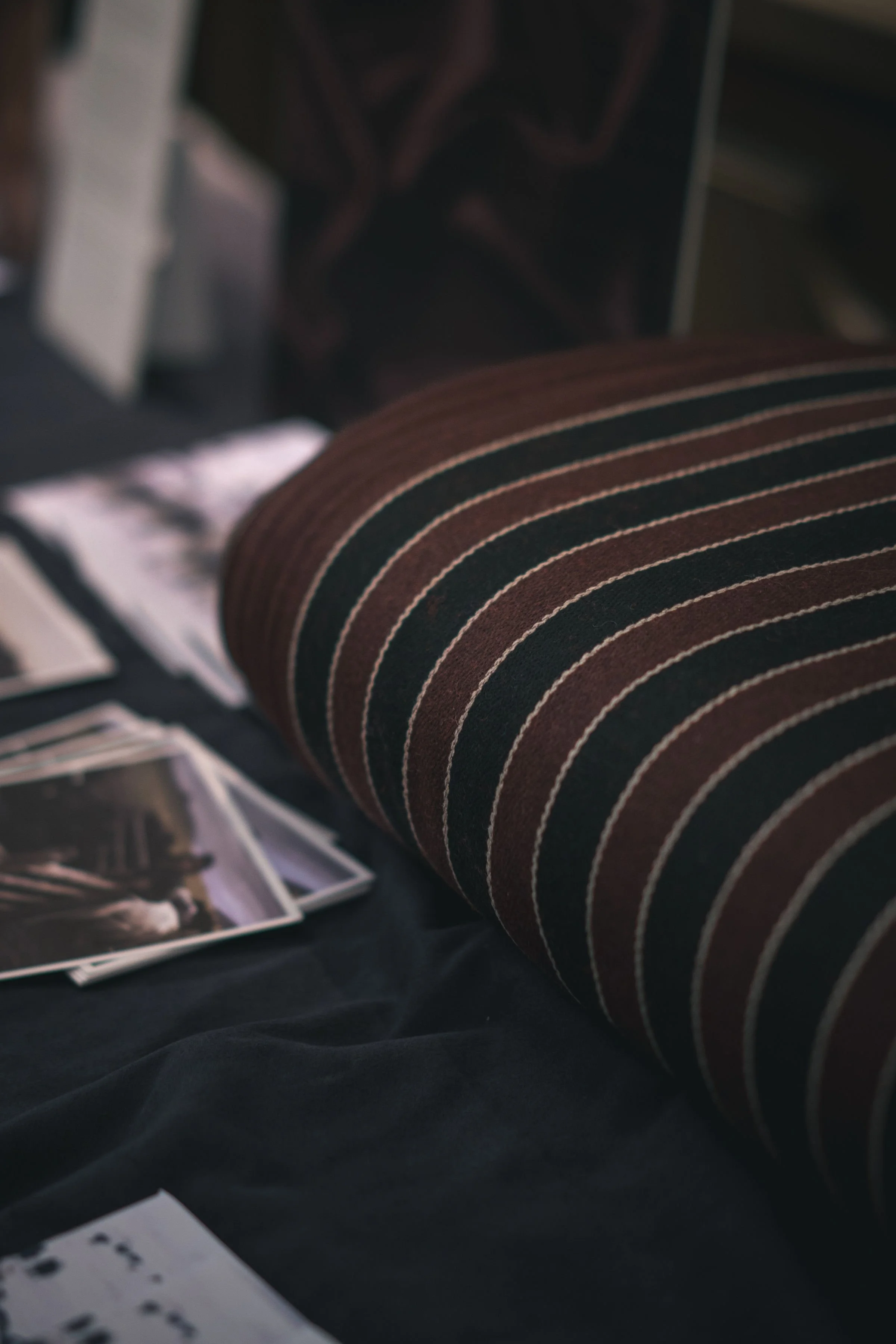
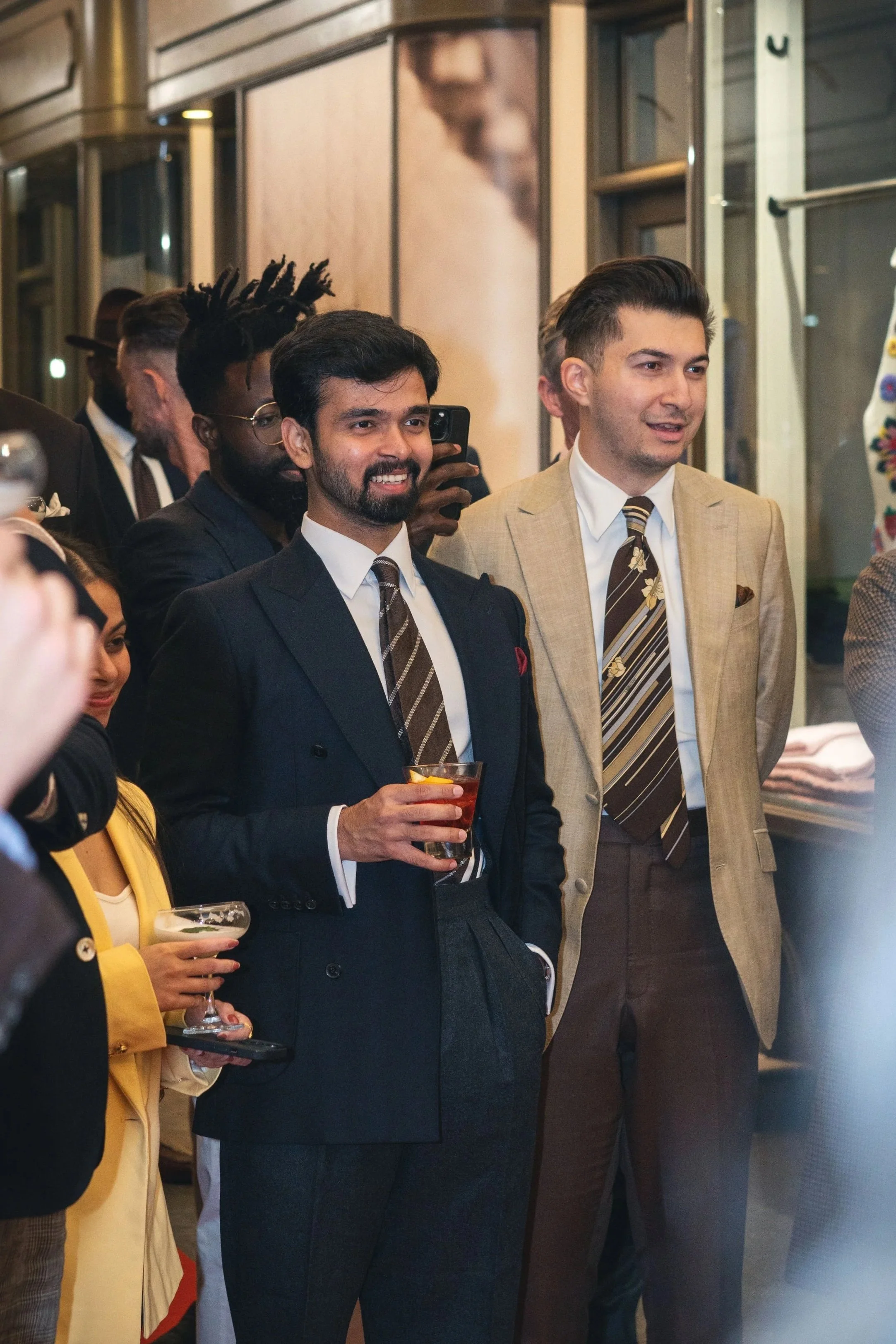
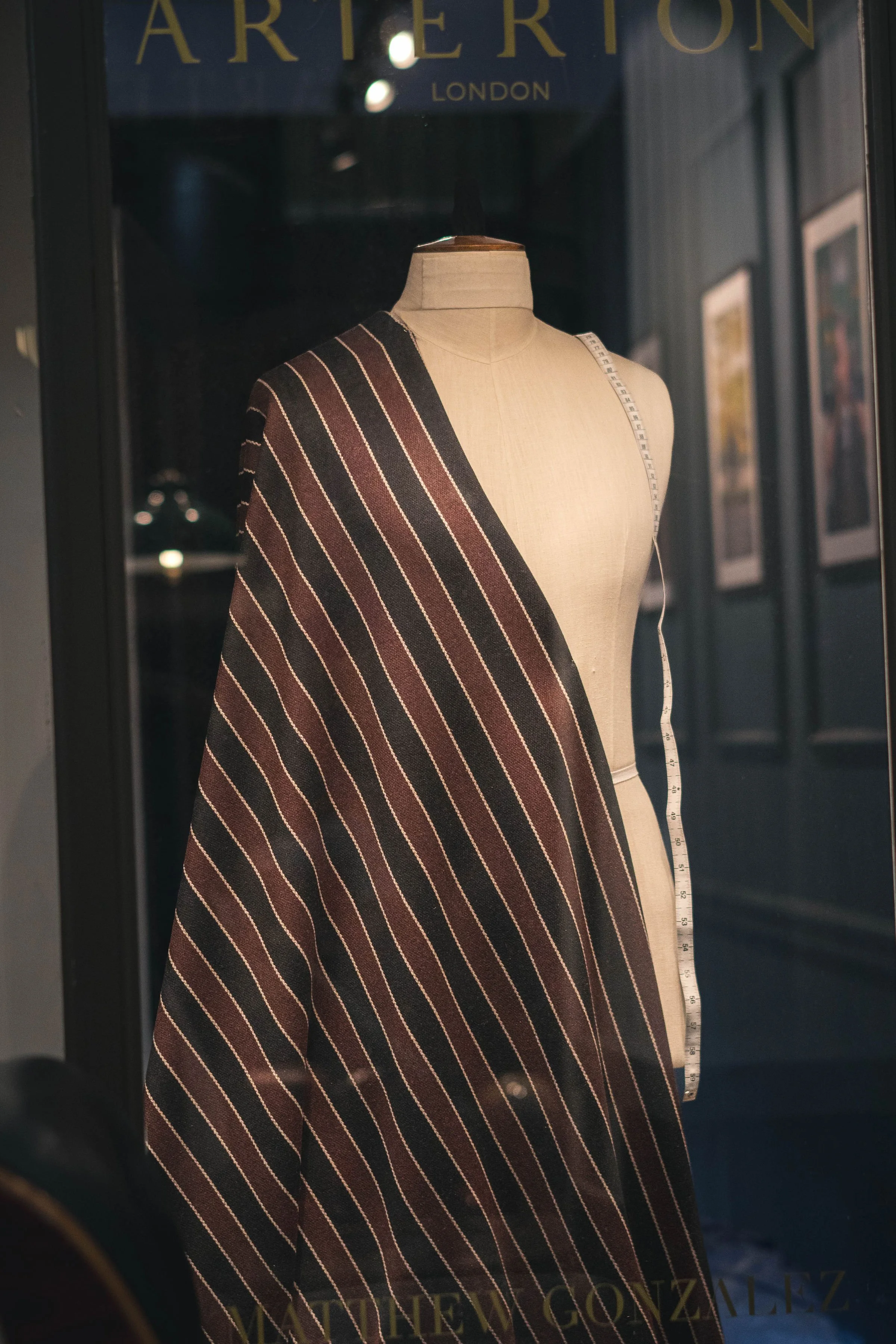
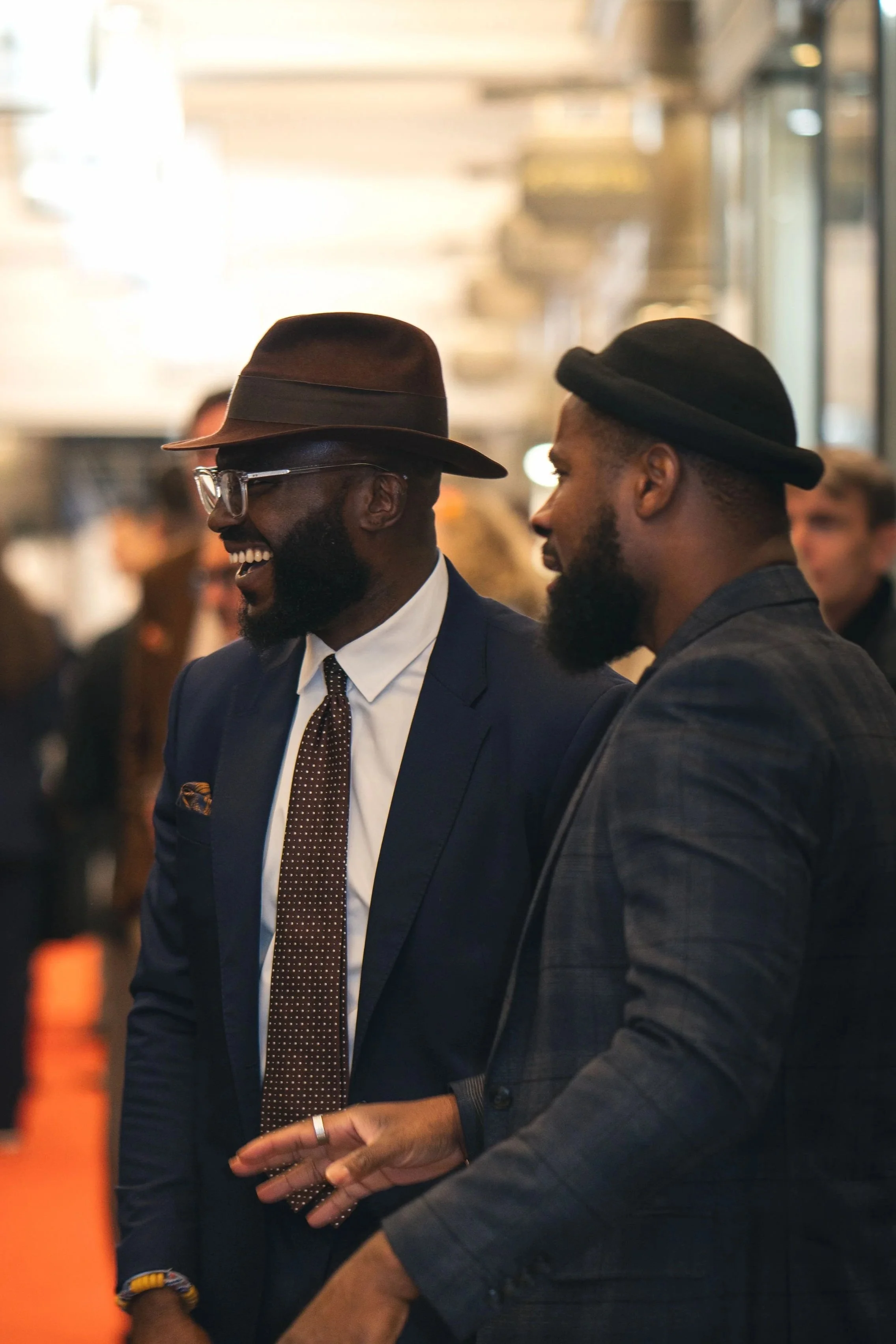
Club cloth launch in London. © The Sartorial Club
‘‘In many ways, bespoke is a quiet rejection of a disposable culture.’’
Q: What does bespoke mean to you today? As ideas of luxury continue to evolve, where do you see the future of craftsmanship?
I think bespoke matters today more than ever.
We live in a world that rewards speed, convenience, and instant gratification. Bespoke asks us to do the opposite. It asks us to slow down, ask questions, build relationships, and appreciate the process.
To me, bespoke has never been just about a perfectly fitting jacket. It's a different way of thinking. It's choosing quality over quantity, longevity over trends, and meaning over convenience.
That's why I believe bespoke continues to resonate. Not because everyone wants a bespoke wardrobe, but because more people are searching for things that feel personal, intentional, and made to last.
In many ways, bespoke is a quiet rejection of a disposable culture.
Q: Finally, what does being 'cut from a different cloth' mean to you?
To me, it's never been about standing apart for the sake of being different.
It's about making conscious choices.
Choosing quality when convenience is easier. Choosing curiosity over assumptions. Choosing relationships over transactions. Choosing craftsmanship in a world that often rewards speed.
Those choices shape how we dress, but more importantly, they shape how we live.
I believe we're living through a craftsmanship renaissance. More people are beginning to value authenticity, longevity, and the human stories behind the things they own. That's incredibly encouraging to see.
So, being cut from a different cloth isn't about exclusivity. It's about sharing a common set of values with people who see the world in a similar way. That's the community we've always wanted to build.
Watch: A Cloth of Distinction
House of Tengri and The Sartorial Club came together to create a cloth shaped not only by material excellence, but by shared commitments to provenance, craftsmanship and community.
In this accompanying film, Dennise Yeh and Nancy Johnston reflect on the collaboration behind the Club Cloth of Distinction and the values woven through it.
Thank you, Dennise, for a conversation filled with depth and meaning.
Discover The Sartorial Club and explore Tengri Noble Fabrics.
